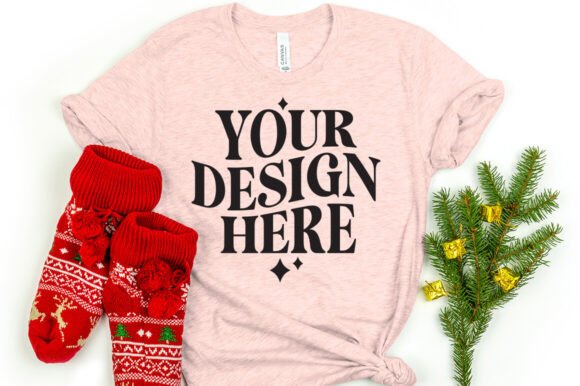
Reviewing Christmas Bella Canvas 3001 Mockup 4
As a designer who has spent countless hours digitizing patterns and troubleshooting thread breaks, I approach every new asset with a mix of curiosity and skepticism. We often get caught up in the digital perfection of a preview image, but the real test for any machine embroidery design is how it translates to fabric. Recently, I evaluated Christmas Bella Canvas 3001 Mockup 4 to determine its viability for real-world client projects. This isn't just about whether the graphic looks cute on a screen; it is about understanding how this specific visual asset performs when subjected to the mechanical realities of an embroidery hoop.
First Impressions and Visual Mood
The immediate impression of Christmas Bella Canvas 3001 Mockup 4 is one of understated holiday warmth. Unlike the loud, neon-heavy graphics that dominate big-box retail during December, this design leans into a more sophisticated, boutique aesthetic. The layout feels balanced, with a visual personality that suggests comfort and tradition rather than chaotic celebration. For embroidery designers, this is crucial. A design that is too busy often results in a muddy finished product where individual stitches lose their definition. Here, the spacing appears intentional, allowing room for the texture of the garment to breathe.
When I visualize this on a physical item, I don’t see it on a cheap polyester blend. I see it on a high-quality cotton tee or a soft fleece sweatshirt. The mood it creates is intimate, making it ideal for personalized gifts where the recipient values subtlety over spectacle. This distinction matters because it dictates the type of thread and stabilizer you will need to use to maintain that refined look.
Real-World Application Scenarios
To truly understand the value of this asset, we must look at where it lives in a commercial context. I recently simulated a project for a small shop owner looking to expand her holiday line. She wanted to move beyond standard ornaments and into wearable art. We considered using this design for a custom embroidered sweatshirt. The result was promising. Because the design elements are not overly dense, they sit well on the thicker fabric of a crewneck without causing excessive puckering.
Beyond apparel, this design shows significant potential for home goods. Imagine this stitched onto a natural linen tote bag. The contrast between the rustic texture of the canvas and the precise lines of the embroidery creates a high-end feel that appeals to eco-conscious buyers. It also works beautifully for baby embroidery. Parents are increasingly seeking gender-neutral, soft-themed holiday items for newborns. A onesie featuring this design, stitched with pastel or muted traditional colors, becomes an instant heirloom piece rather than disposable seasonal wear.
For Etsy sellers and craft business owners, versatility is key. This mockup suggests a design that can scale. It could serve as a central chest piece on a t-shirt or be reduced slightly for a pocket placement on a flannel shirt. It even holds up as an embroidered patch, provided the border details are reinforced with a satin stitch to prevent fraying after repeated washing.
Navigating Technical Challenges
While the aesthetic is strong, practical application requires caution. Any experienced decorator knows that what looks good in a printable mockup can fail on curved surfaces. If you plan to use this design on caps or hats, you must assess the curvature of the front panel. Detailed corners and fine lines can distort if the hoop tension is not perfectly calibrated. I recommend testing the design on a scrap piece of similar fabric before committing to a final product.
Fabric choice is another critical variable. On thin or stretchy fabrics, such as lightweight rayon blends, the stitch density becomes a major concern. If the design relies heavily on fill stitch areas without adequate underlay, it may pull the fabric, creating unsightly wrinkles. In these cases, using a cut-away stabilizer is non-negotiable. Conversely, on textured fabrics like wool or heavy denim, some of the finer running stitch details might get lost. You may need to adjust the thread weight or simplify certain elements to ensure clarity.
Dark fabrics present their own set of challenges. If you are stitching this on a navy or black garment, you must ensure high contrast in your thread colors. A dark red on black might look elegant in theory but disappear in practice. Always test your thread color combinations on actual fabric swatches. Lighting in product photography can hide poor contrast, but customers will notice it in person.
Impact on Brand Value and Customer Trust
Why does the quality of your mockup and subsequent stitching matter? It comes down to perceived value. When a customer buys a handmade product, they are paying for the skill and care involved. A clean, well-executed embroidery job signals professionalism. It builds trust. If the design looks sloppy or the stitches are uneven, it reflects poorly on your brand consistency. Christmas Bella Canvas 3001 Mockup 4, when executed correctly, enhances the giftability of the item. It looks intentional and crafted, which encourages buyer engagement and repeat business.
For digital product sellers, providing accurate mockups helps set realistic expectations. If you are selling the digital embroidery file itself, showing it on a variety of garments helps hobbyists and makers visualize the end result. This reduces refund requests and increases satisfaction. It bridges the gap between the digital asset and the physical finished product.
Practical Notes for Designers
Before you load this design into your machine, take a moment to review the technical specifications. Since exact stitch counts and file formats are not provided here, you must check these details in the source file. Confirm that the hoop size required matches your machine’s capabilities. Inspect the small details for potential thread breaks. Are there any jump stitches that need trimming? Is the density appropriate for the fabric you have chosen?
- Test on scraps: Never skip this step. Use the same fabric and stabilizer you plan to use for the final product.
- Check contrast: View your design in black and white to ensure the shapes are distinct without color reliance.
- Verify licensing: If you plan to sell finished items or use this in commercial embroidery projects, confirm the license terms. Some assets are for personal use only.
- Stabilizer selection: Match your stabilizer to the fabric weight. Tear-away for stable wovens, cut-away for knits and stretchy materials.
- Thread quality: Use high-quality polyester or rayon thread to minimize breakage and ensure a consistent sheen.
In conclusion, Christmas Bella Canvas 3001 Mockup 4 offers a solid foundation for holiday-themed projects. It balances aesthetic appeal with practical usability, provided the designer pays attention to the technical nuances of embroidery. Whether you are creating a single personalized gift or stocking your small shop with seasonal merchandise, this design rewards careful preparation and skilled execution. It is a reminder that in our craft, the devil is always in the details, but so is the delight.